From the Field Journal of Ambrose Penhallow
The Winged Ray
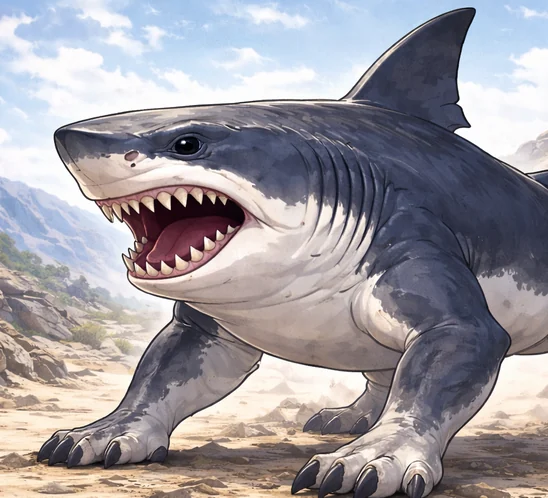
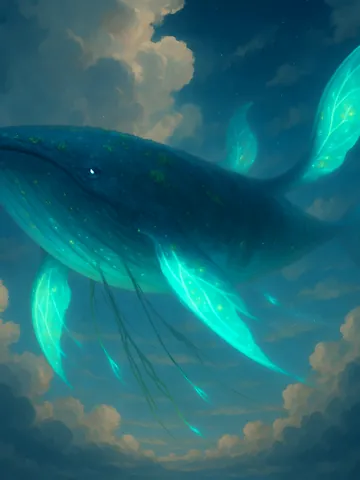
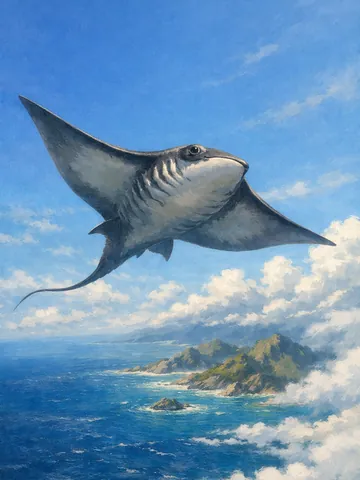
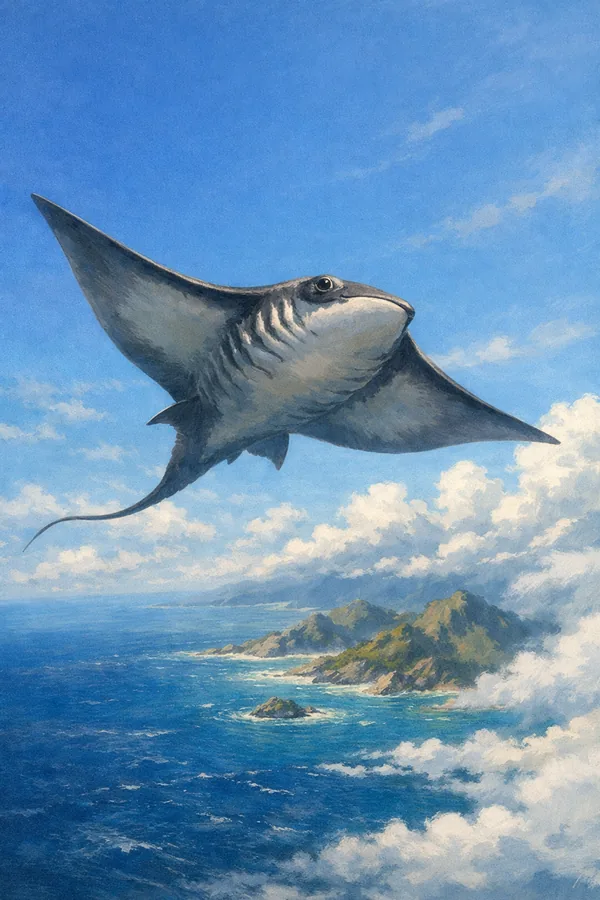
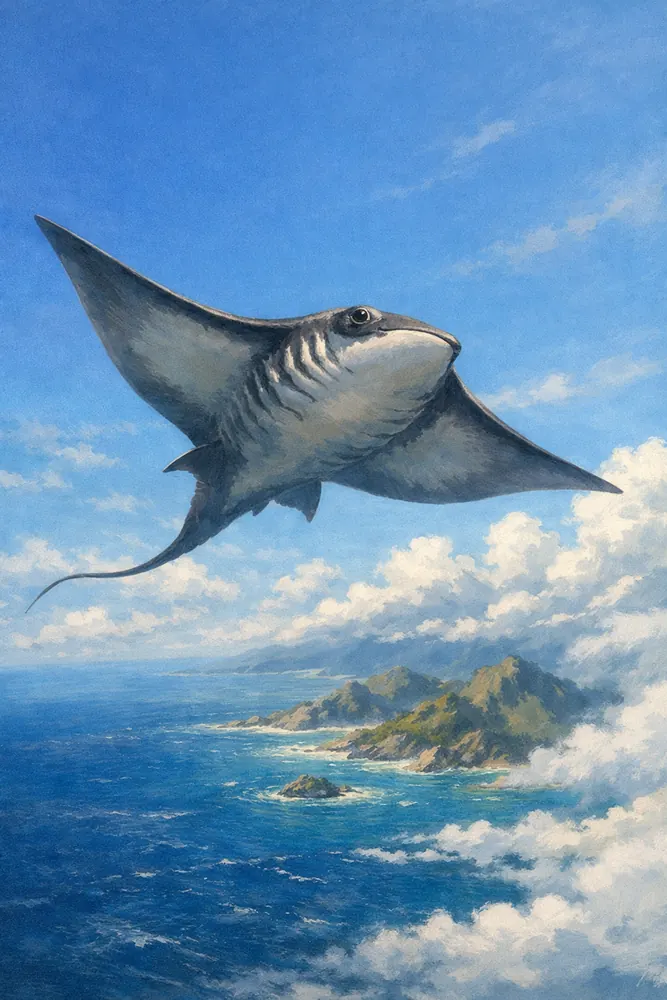
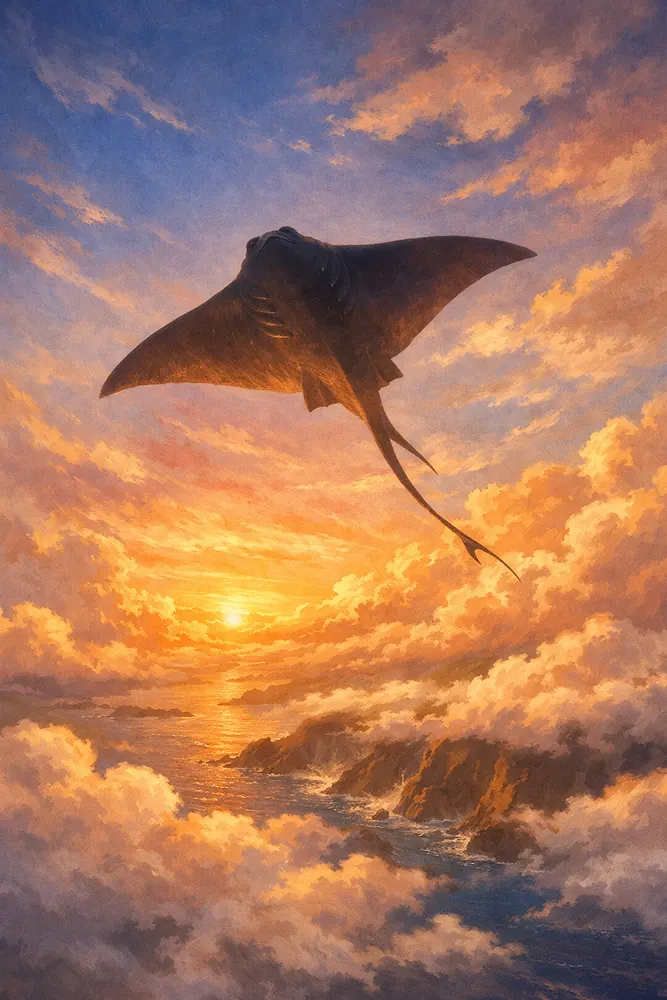
The Winged Ray is what happens when a creature looks at the horizon and refuses to accept it as a boundary. Its body is a great flat diamond of slate-grey, pale underneath, with a broad grinning face and a row of gill-slits down each side that flutter in the wind like the pages of a book. The “wings” are simply its fins, impossibly wide, and the tail behind it is long and whip-thin, crackling faintly when the air is dry.
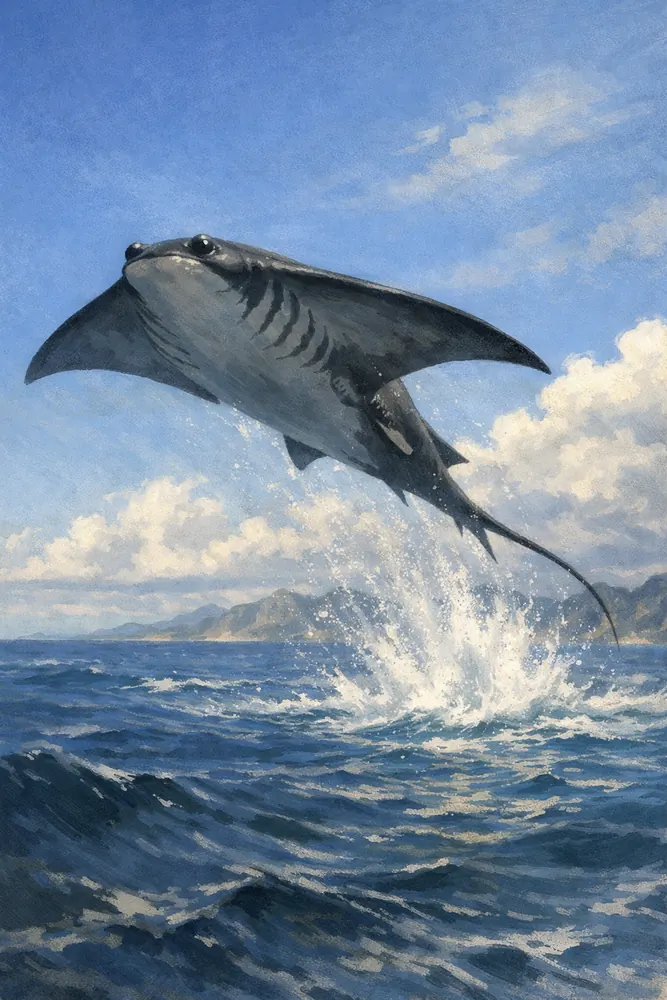
They live in the open ocean around the sea cliffs, and they seem to treat the sky as merely a shallower kind of water. I watched one burst from the waves in a spray of foam, beat its fins twice, and then simply keep going, riding the wind for miles before folding up and slicing back into the sea without so much as a splash.
The Mystery of the “Ribbon Wind”
Sailors still tie colored ribbons to their masts to honor the Winged Ray, and I assumed this was mere superstition until I saw the rays collect them. They glide alongside a ship, pluck a ribbon free with their mouths, and carry it off. Nobody seems to know where they go.
A Cephalyn priest of the upper nation told me the ribbons are carried to the Ventara as messages; the color of each ribbon is a word in an old shared tongue, and the rays are the couriers. His skin rippled a calm, confident blue as he said it. A Silkie trader on the docks, however, assured me there is no message at all. The rays, she said, are building nests on the cliff tops and simply like bright things. She then offered to sell me the location of one such nest for a secret of equal value. I did not have one, so the matter remains unsettled.
On the Matter of Bonding
A Winged Ray will not bond with someone who is afraid of either falling or drowning, which, I regret to say, rules me out twice over.
The Sirens of the western cliffs are the acknowledged masters here. Their method is to call a ray in with a long, wordless note and then, as it passes beneath the cliff, step off into empty air. If the ray catches them, the bond is made. If it does not, they fall into the sea and try again the following year. A Siren I spoke to had tried four times. She seemed entirely untroubled by this, which tells you something about Sirens.
The Cephalyn have a gentler way: they ride the ray underwater first, for weeks, until it trusts them enough to carry them up into the air. It takes far longer, but nobody falls off a cliff. When I suggested to the Siren that this seemed more sensible, she looked at me with deep pity and said, “Where is the conversation in that?”
Observed Magical Variations
Most Winged Rays I have seen are creatures of wind and salt, but the variants change dramatically depending on where along the sea-sky boundary they prefer to linger.
Slate-grey back, pale belly; a tail that sparks blue when it lashes.
The common ocean glider. Rides storm fronts for whole days without touching water.
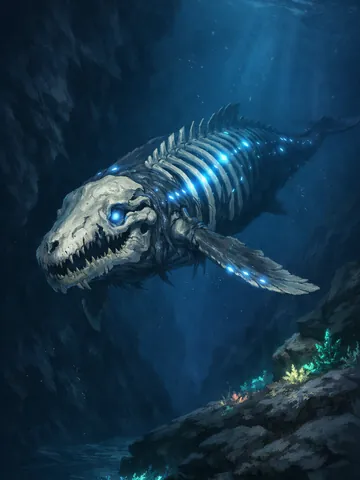
Ink-black from tip to tail; its shadow seems a little too large for its body.
Hunts at dusk. The fish below scatter from its shadow long before the ray itself arrives. Sailors refuse to name it aloud.
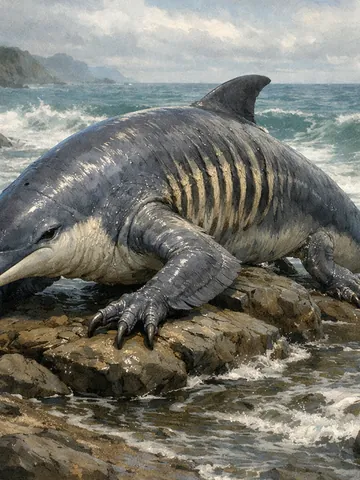
Mottled blue and coral-pink; fins frilled at the edges like seaweed.
Rarely leaves the sea at all, preferring to “fly” through the deep currents. The Cephalyn consider it the original, and the others mere show-offs.
Ambrose PenhallowLorekeeper, Midlands Grand Academy