From the Field Journal of Ambrose Penhallow
The Unicorn
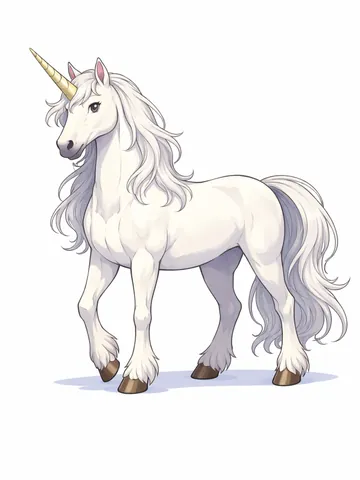
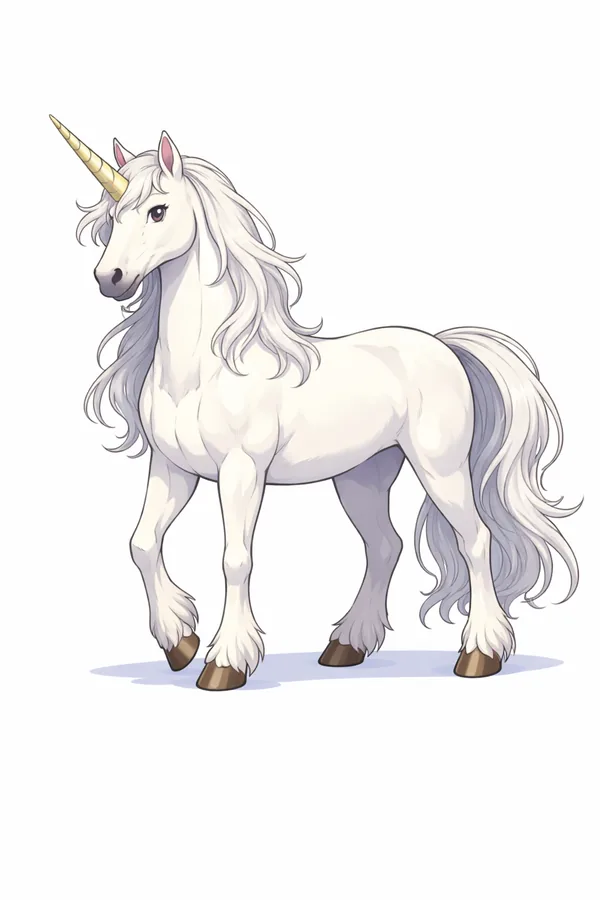
I will confess at once that I have seen a Unicorn only twice, and both times by accident, which I am told is the only way anyone ever sees one. It is a horse of impossible whiteness, the kind of white that makes fresh snow look a bit grubby, with a mane that moves as though it were under water even when the air is still. The horn is long and spiralled like a seashell, and it gives off a soft light that does not so much shine as settle, the way dawn settles on a field.
They live in hidden glades deep in the High Canopy, among trees old enough to have opinions. The glades are not hidden in any ordinary sense: I have walked past the spot where I first saw one at least six times since, and found nothing but brambles and a very smug squirrel.
The Mystery of the “Clean Trail”
Wherever a Unicorn has walked, the world is a little tidier afterwards. I do not mean this poetically. I found a stream below one of its glades running so clear I could count the pebbles at the bottom, and a mile further on it was as muddy as any other. Rust had fallen off an old iron gate it had brushed against. Even the mushrooms along its path looked healthier, and rather more cheerful.
A Wika shaman who had traveled from the swamps to trade told me that Unicorns do not purify anything at all; they simply remind things what they used to be, and the things, embarrassed, go back to it. A Silkie I paid handsomely for her opinion (three secrets, one of them quite good) said the Wika had it backwards: the Unicorn is not reminding anything, it is forgetting the dirt, and the world goes along with it out of politeness. I have written both down and understood neither.
On the Matter of Bonding
Every scholar at the Academy can recite that a Unicorn choosing you is a sign of a good heart. What the texts leave out is how uncomfortable that is. A Unicorn does not want to be impressed. It does not want food, music or flattery. It seems only to want to know what you are like when you think nobody is watching, and it is, I suspect, always watching.
The people who know most about this are, surprisingly, the Sirens. They told me that in the dark ages when Unicorns were hunted for their horns, it was the coastal folk who hid them in sea caves, singing to cover the sound of their hooves. Sirens still sing to them now, not to call them, but to thank them. They say a Unicorn never comes to a song that wants something, and that the trick to bonding is to stop wanting one.
I have tried very hard not to want one. This has proven to be exactly as effective as you would imagine.
Observed Magical Variations
Unicorns are so rarely seen that this table rests mostly on borrowed accounts, though I stand behind the first entry personally.
Pure white coat; pearl horn that glows softly from within.
The classic Unicorn. Its circle of light is said to stop shadow magic dead, and I watched a stray Hag-rune scratched on a nearby stone simply fade as it walked by.
Silver-blue coat; a horn of glassy, sea-green spiral.
Said to live on the sea cliffs where the Sirens once hid its ancestors. Its horn can turn a barrel of salt water fresh with a single touch.
Creamy dappled coat flecked with moss; a gnarled horn like polished oak.
The Wika swear it walks the deep forest floors and heals sick trees. It is apparently quite grumpy, which makes it my favorite.
Ambrose PenhallowLorekeeper, Midlands Grand Academy