From the Field Journal of Ambrose Penhallow
The Phoenix
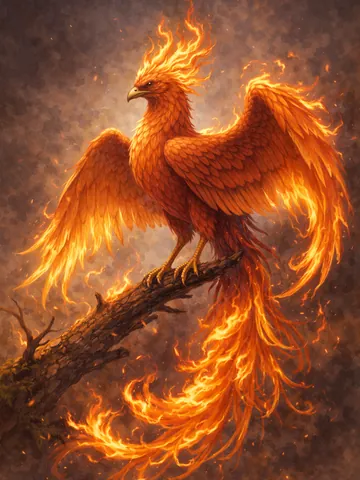
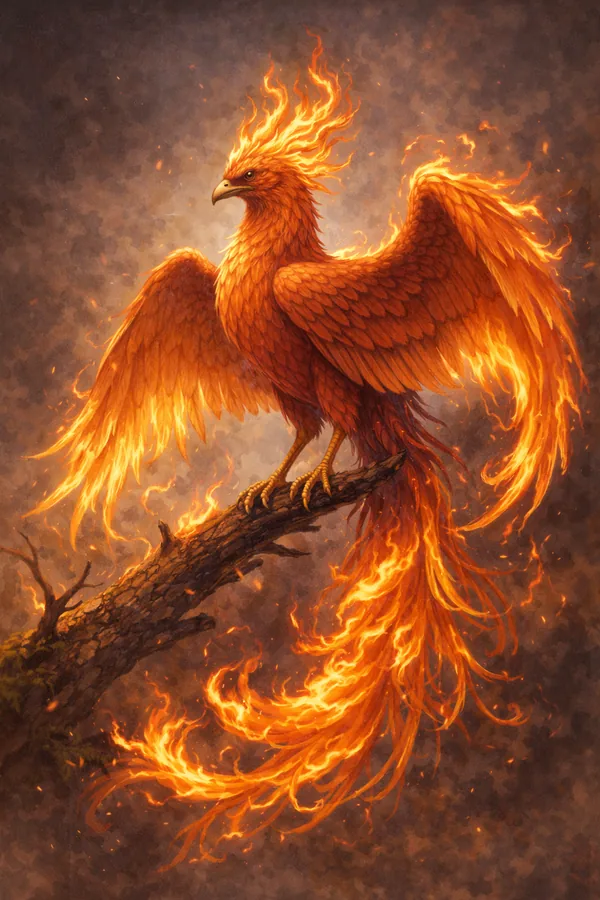
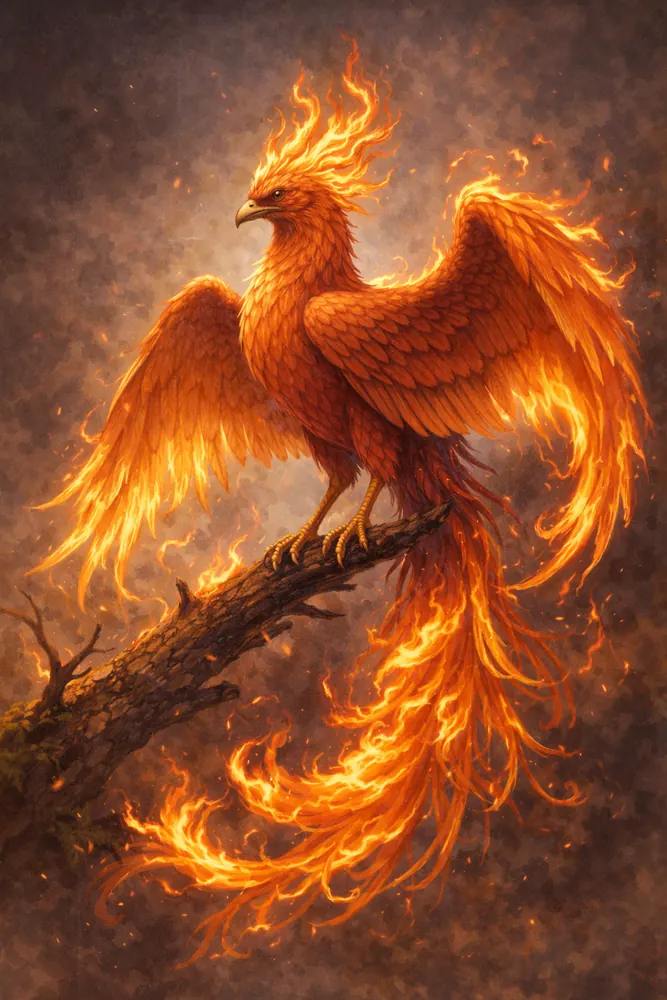
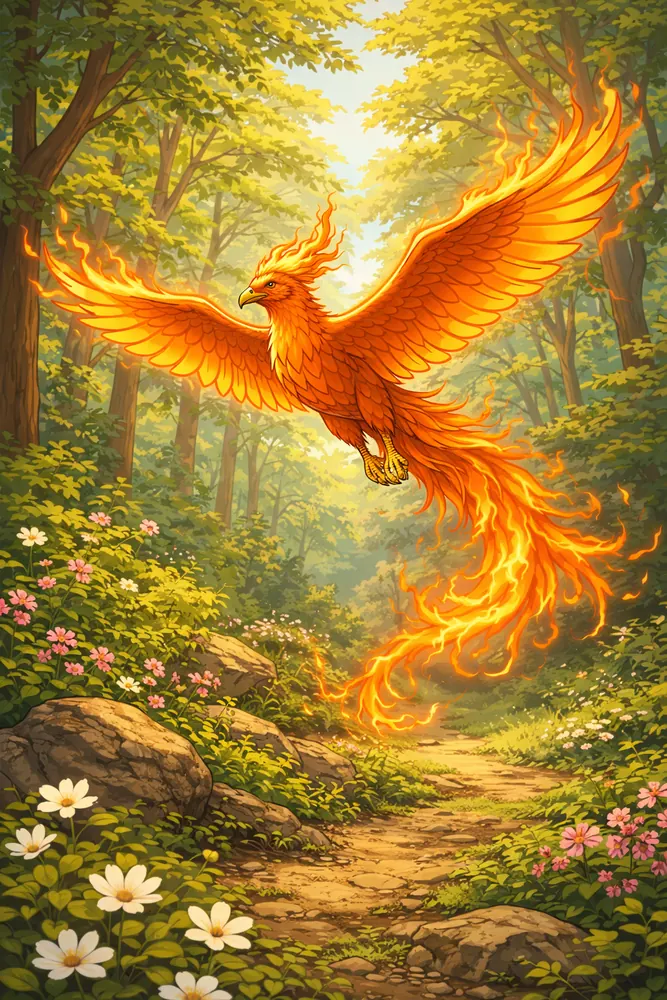
I had heard a hundred stories about the Phoenix before I ever saw one, and not one of them prepared me for how quiet it is. I expected a roaring bonfire with a beak. Instead it was a bird about the size of a heron, perched on a dead branch above a sunlit clearing, its feathers moving like the flames of a well-tended hearth: gold at the heart, deepening to orange and then crimson at the tips. The branch beneath it was not even singed. When it took off, it left a trail of sparks that drifted down like slow, warm snow and went out before they touched the grass.
They are among the rarest creatures I have ever tried to study. They nest in the high places of sunlit forests and on the slopes of volcanic peaks, and they seem to move between the two according to some calendar of their own. In two years of tracking I have seen precisely four.
The Mystery of the “Cold Ash”
Everyone knows a Phoenix is reborn from its own ashes. What nobody had told me is that the ashes are cold. I found a rebirth site on the slopes of a lava mountain, a perfect circle of pale grey dust, and I knelt to touch it expecting to burn my fingers. It was cold as a cellar floor, and stayed cold for three days while the mountain steamed all around it.
The Hesskari, who know the Phoenix better than any people alive, told me this is because the bird takes every scrap of its heat with it into the new life, and “leaves nothing for thieves.” A Silkie trader I met in a port tavern had a rather different theory. She said the ash is cold because the Phoenix does not really burn at all; it simply steps out of the old body and leaves it behind, like a coat. She offered to tell me where the Phoenix steps to, in exchange for a secret of my own. I gave her the Academy’s dinner menu for the coming term. She seemed unimpressed.
On the Matter of Bonding
The Hesskari are the only people I have met who bond with Phoenixes with any regularity, and they do it through their mirror summoning. A Phoenix, they say, is curious about its own fire. If a summoner holds up a polished mirror at dawn, and the bird stops to look at itself, it is considering you. If it looks at you instead of the mirror, it has decided.
Their first day of the year is the great fire festival held in its honor, and the dunes and beaches are lit with bonfires from end to end. I attended one. An old Hesskari pirate captain with a great many gold teeth told me that a Phoenix chooses its companion not for courage or skill, but for passion; it wants someone who burns as brightly as it does. He then dared me to leap a bonfire. I declined. He said that explained a great deal.
I did, however, see a young Hesskari girl bond with one that night. She had sat by the same fire for nine festivals running, never once leaping, simply tending it. The Phoenix landed on her shoulder and stayed there. Passion, it turns out, comes in more than one shape.
Observed Magical Variations
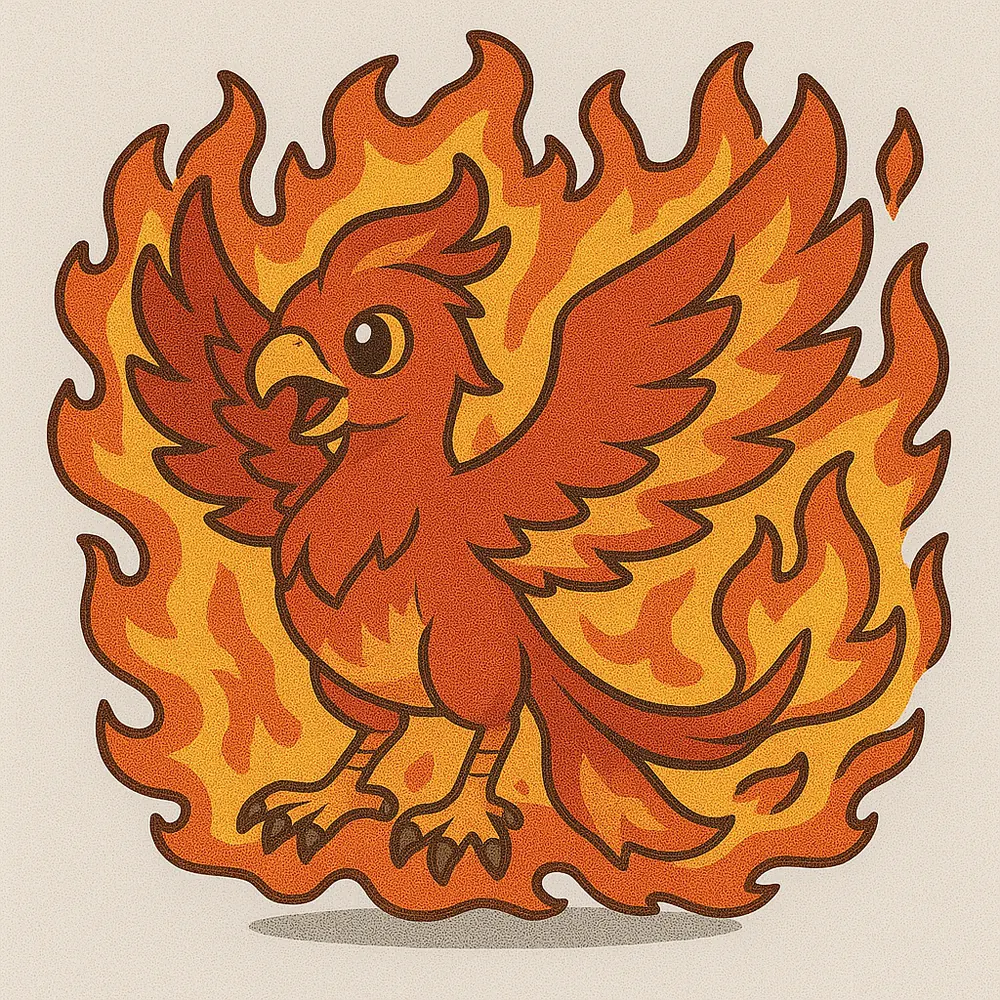
A Phoenix is a bird of fire through and through, but the old stories (and two of my own sightings) suggest it can be reborn into other magics too.
Gold and crimson plumage; a crest like a candle flame.
The classic firebird of the festival songs. Its tears are said to close any wound, and a Hesskari healer showed me a scar on her arm she swears was mended by one.
White-gold feathers; a long tail that trails pale light.
Only seen at sunrise. The Ventara sing to it rather than mirror-summon it, and claim its rebirth takes a single breath instead of a day.
Smoke-black feathers lit from within by dull red embers.
Rumoured, never confirmed by me. The Hesskari will not speak of it at festivals. One told me it is a Phoenix that was reborn angry.
Ambrose PenhallowLorekeeper, Midlands Grand Academy