
From the Field Journal of Ambrose Penhallow
The Nine-Tails
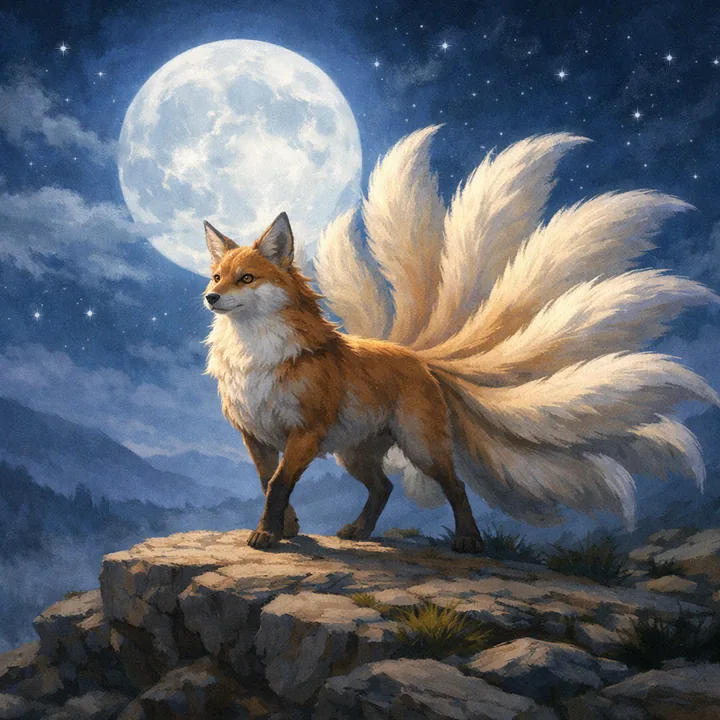
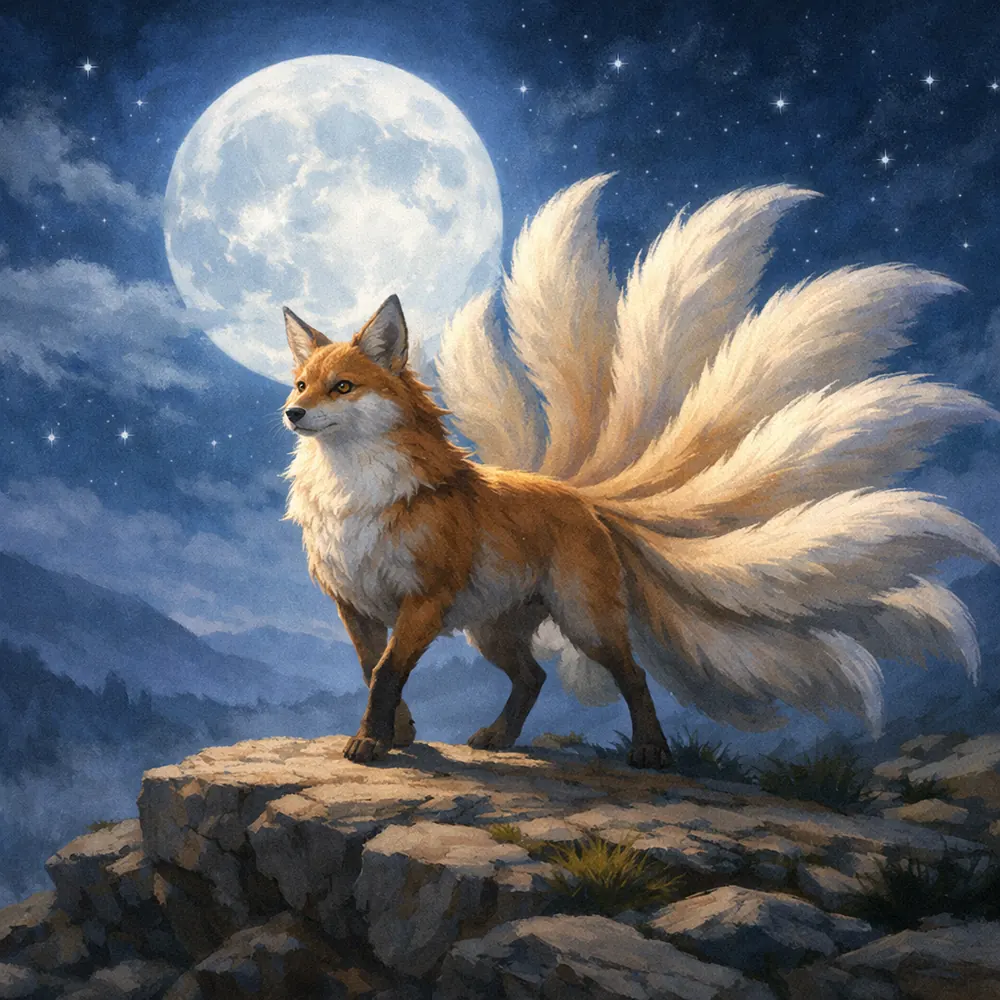
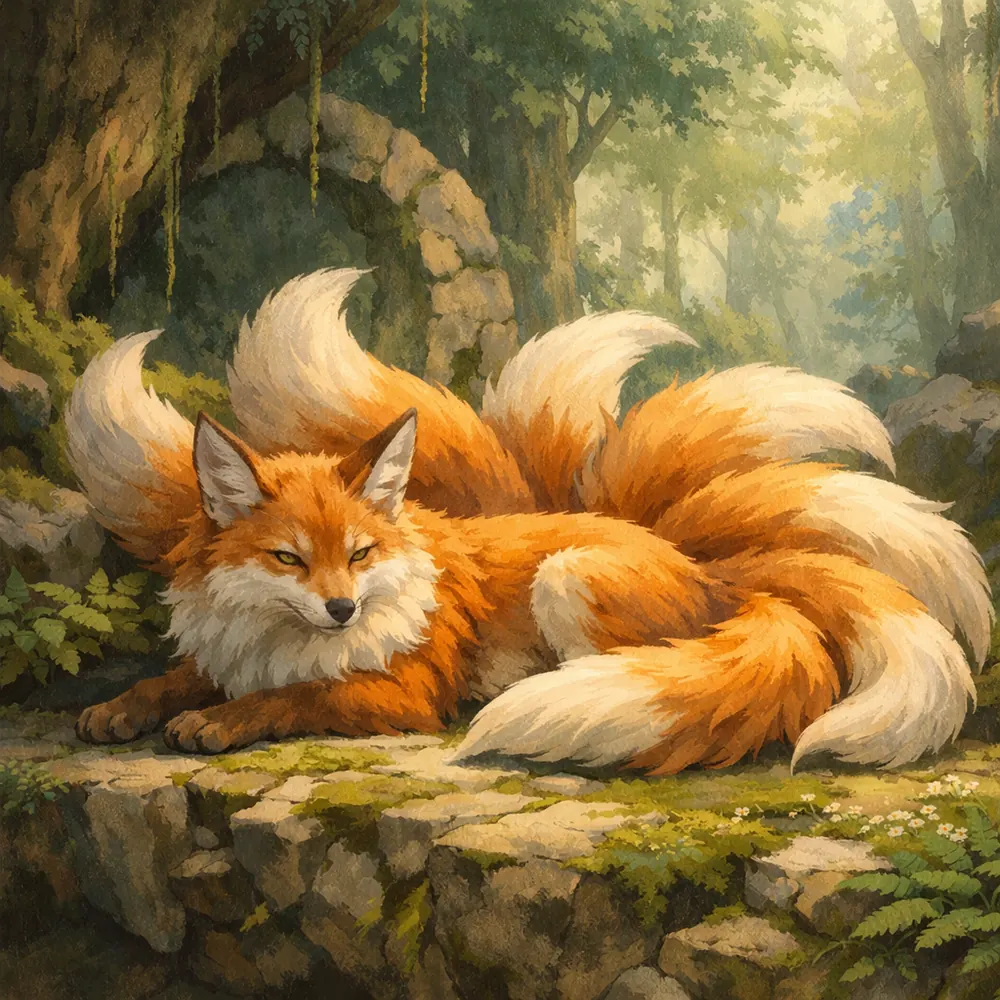
At first glance the Nine-Tails is simply a very handsome fox, the sort a portrait painter would invent if asked to flatter a fox. Then it turns, and the tails come up behind it like a hand of cards being fanned across a table: nine of them, each a slightly different shade of pale gold, each moving on its own small business. I counted them four times on my first sighting and got eleven, seven, nine and “too many.” I am told this is normal.
They keep to old places. Every shrine I have visited between the Midlands and the eastern woods seems to have one somewhere nearby, curled on a cracked step or sitting very upright beneath a lantern that nobody remembers lighting. They are not shy, exactly. They simply behave as though you are the visitor, which, to be fair, you are.
The Mystery of the “Empty Shrine Offerings”
Wherever a Nine-Tails lives, the shrine offerings vanish overnight; but only some of them. Rice cakes are left alone. Polished stones, ribbon, a child’s carved whistle: gone. I spent eleven nights watching a single shrine and on the twelfth I fell asleep, at which point my own pocket watch went missing as well.
The Wika I met on the edge of the Hollow Fen insist the foxes take only things that carry a memory, and that each tail is a kind of storehouse for what it has collected. A Ventara piper who overheard this was deeply offended and told me, with great confidence, that the foxes simply like shiny things and are “no better than a magpie with manners.” I have no idea who is right. I would, however, very much like my watch back.
On the Matter of Bonding
Everyone knows the Nine-Tails tests its companions with riddles. What nobody warned me is that the riddles are not meant to be solved. The point, as far as I can tell, is to see whether you will pretend to know an answer you do not.
My first attempt went badly. The fox sat before me and posed something about a river that runs uphill, and I (being an Academy man with a reputation to keep) produced a very elegant theory about tidal bores. The fox listened politely to the whole thing and then walked away. The Wika shaman who had been watching from her floating hut simply called out, “You should have said I don’t know, Lorekeeper.” I have since learned that the most successful bonders are often small children and very old grandmothers; the two groups least embarrassed by ignorance.
The Wika themselves treat bonding as a kind of shared dreaming. They say a Nine-Tails will visit you in your sleep three nights running before it ever approaches you awake, and that if you do not remember the dreams, you were not paying attention. I remember only a dream about a staircase made of soup, which I am fairly sure does not count.
Observed Magical Variations
The tails seem to take on the character of whatever magic a Nine-Tails has settled into, though the fox itself remains unbearably composed in every form.
Pale gold fur; tails tipped with soft white flame.
The classic shrine-keeper. Its foxfire drifts around it in slow circles, and I have watched lost travelers follow those lights straight to the nearest inn.
Deep russet coat; tails that smolder at the ends like snuffed candles.
Prefers hearths and kitchens to shrines. A village baker swears hers keeps the oven at a perfect heat in exchange for the burnt crusts.
Silver-blue fur; tails so fine they look like trailing fog.
Haunts lakeside shrines at dawn. Its reflection in the water reportedly has a different number of tails than the fox itself, which I have chosen not to think about.
Ambrose PenhallowLorekeeper, Midlands Grand Academy