From the Field Journal of Ambrose Penhallow
The Nectar Dragon
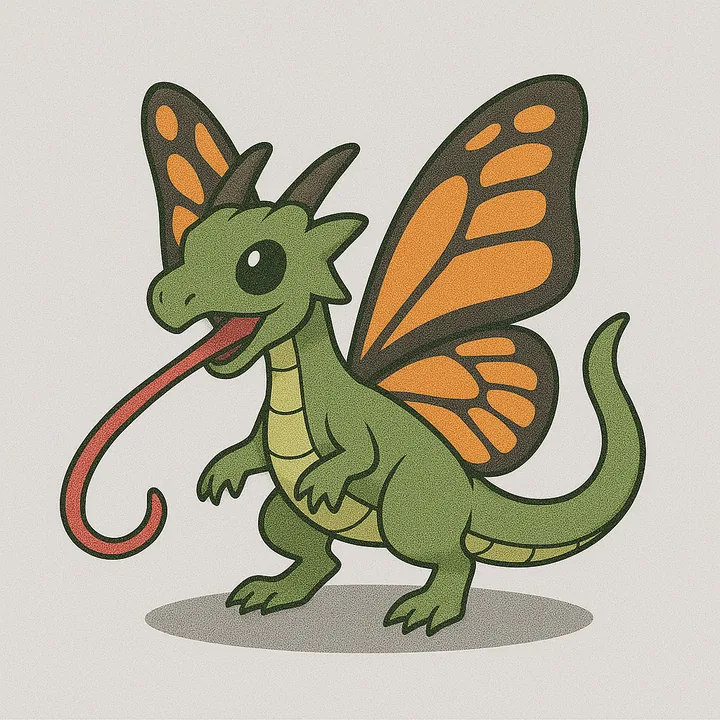
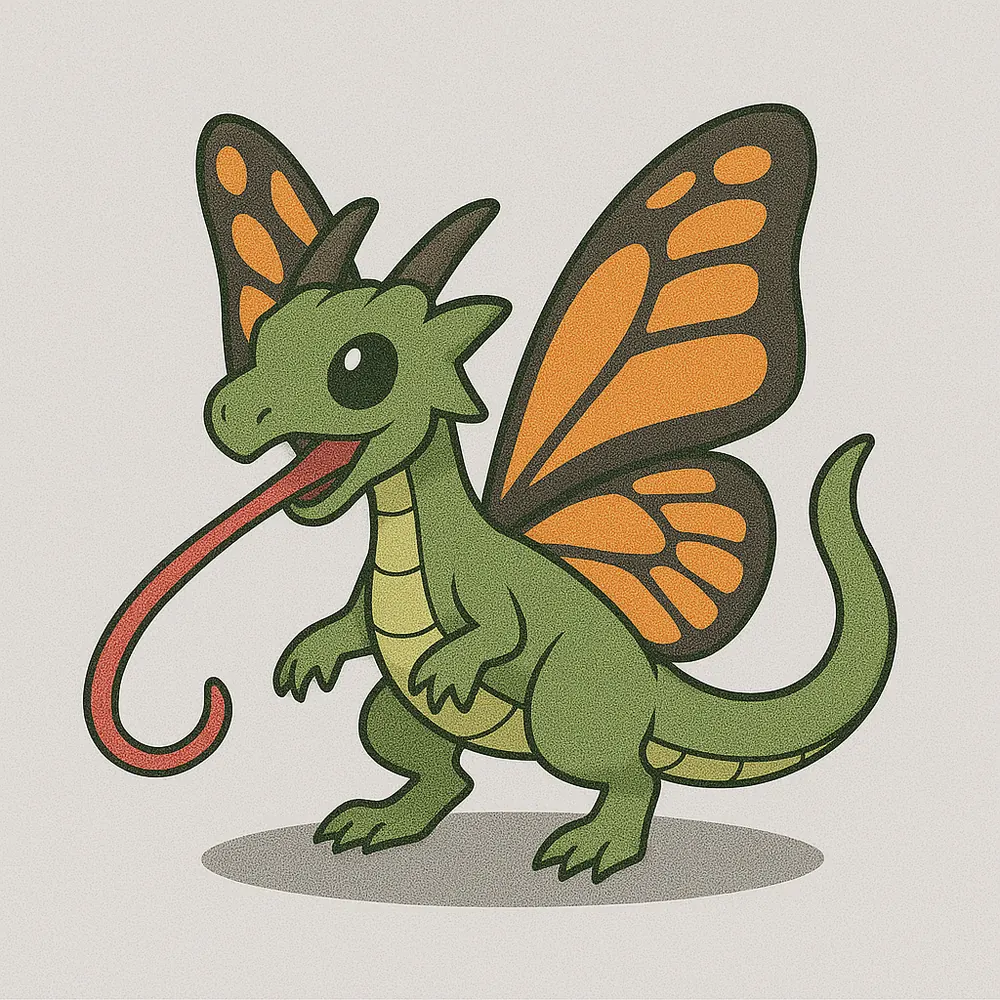
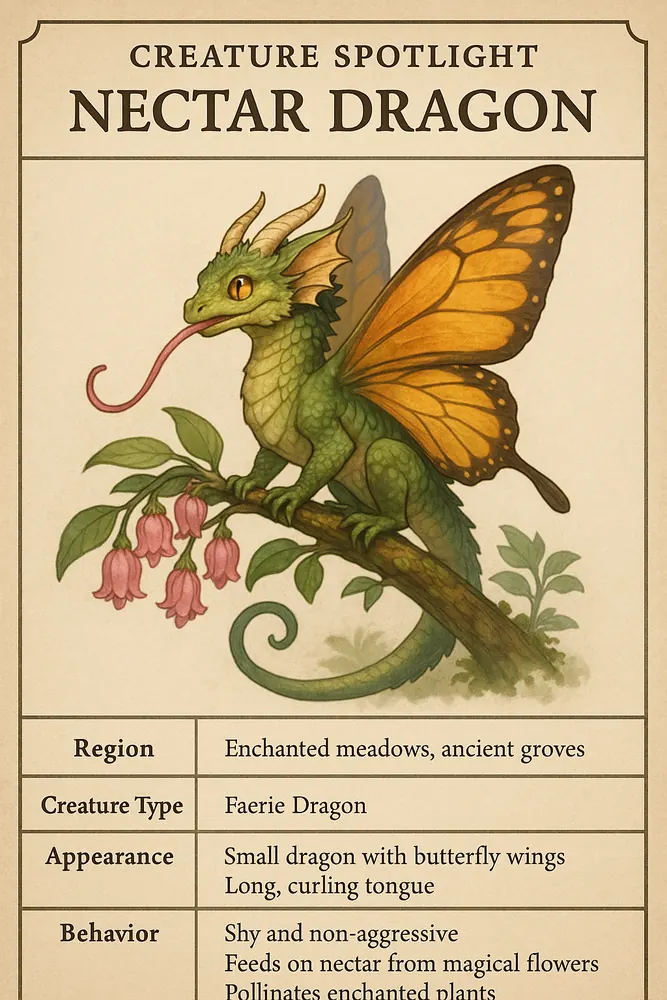
If a Dragon is a landscape, the Nectar Dragon is a single, perfect flower. It is no bigger than a sparrow, with a moss-green body, a pale cream belly and a pair of tiny, stubby horns that it seems to have borrowed from a much larger relative. Its wings are the real marvel: broad, orange-and-black panels patterned exactly like a monarch butterfly’s, so that at rest it simply vanishes among the blossoms. When it feeds, a long, curling tongue unrolls from its mouth like a party streamer and dips into the deepest bells.
They live in enchanted meadows and old groves, where the magical flora grows thickest. You can always tell a meadow that hosts Nectar Dragons: the flowers are brighter, the bees are lazier, and there is a faint, sweet shimmer of pollen hanging in the air that makes your nose itch and your worries feel very far away.
The Mystery of the “Midsummer Hush”
On the longest day of the year, every Nectar Dragon in a meadow stops feeding at precisely noon and perches, wings spread, facing the sun. They hold this pose for nearly an hour, not moving, not feeding, barely breathing. Then, all at once, they burst back into motion as though nothing had happened.
The Ventara, who share many meadows with them, say the Nectar Dragons are “listening to the light,” taking in a whole year’s worth of sun in a single sitting. A Wika shaman I met at the edge of a marsh grove had a much darker explanation: she said they are remembering the time before Shadow was trapped, when the light was not so lonely, and that the hush is a kind of grief. She said this with such conviction that I found myself feeling quite sad for the little things, until one of them sneezed pollen into my eye.
On the Matter of Bonding
The main entry is quite right that a patient summoner may find a Nectar Dragon perched on their shoulder. What it does not tell you is how long patient means, or how many bees will investigate you in the meantime.
The Ventara are the true experts. Their method is to sit in a meadow and play the same slow, soft melody day after day until the Dragons stop treating them as an intruder and start treating them as a particularly large and musical flower. A young Ventara piper showed me the trick: you dab a little honeysuckle oil on the back of your hand and hold perfectly still. The Dragon comes for the scent, stays for the song, and, if you are very lucky, decides you are worth returning to.
I sat in a meadow outside a Midlands village for four days with honeysuckle oil on both hands. On the fifth day a Nectar Dragon finally landed on me. It was on my nose, and it immediately tried to feed from my nostril. I sneezed. It fled. The piper has not stopped laughing since.
Observed Magical Variations
The pattern on a Nectar Dragon’s wings is the surest guide to its magic, and to the flowers it prefers.
Moss-green body; orange-and-black monarch wings that glow faintly in sunlight.
The common meadow sprite. Its pollen soothes small cuts and bad tempers alike. Utterly hopeless at hiding from Ventara children.
Smoky violet body; wings of dusky purple speckled with silver.
Feeds only on night-blooming flowers. Its pollen brings deep, dreamless sleep, which the Wika harvest for their healing rites.
Pale blue-green body; translucent wings veined like a dragonfly’s.
Haunts riverside lilies and drinks the morning dew. Its tongue is long enough to reach the water from a reed, which it does with great showmanship.
Ambrose PenhallowLorekeeper, Midlands Grand Academy