
From the Field Journal of Ambrose Penhallow
The Manticore
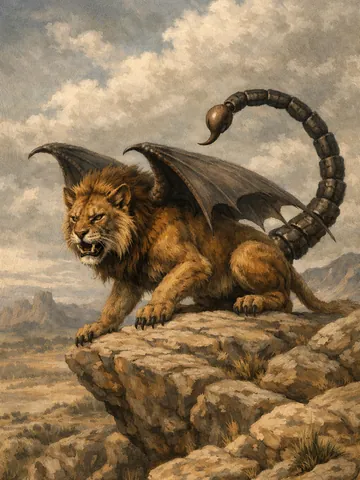
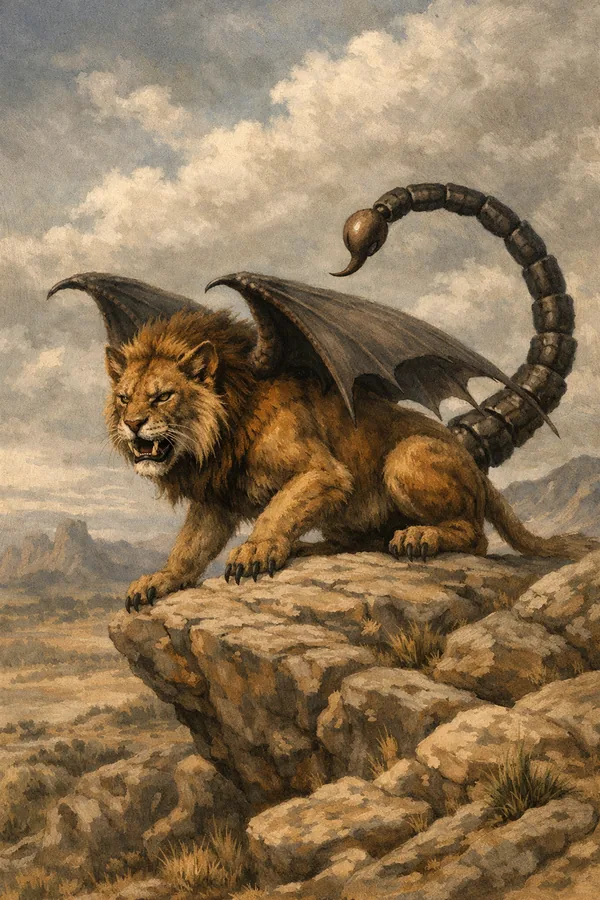
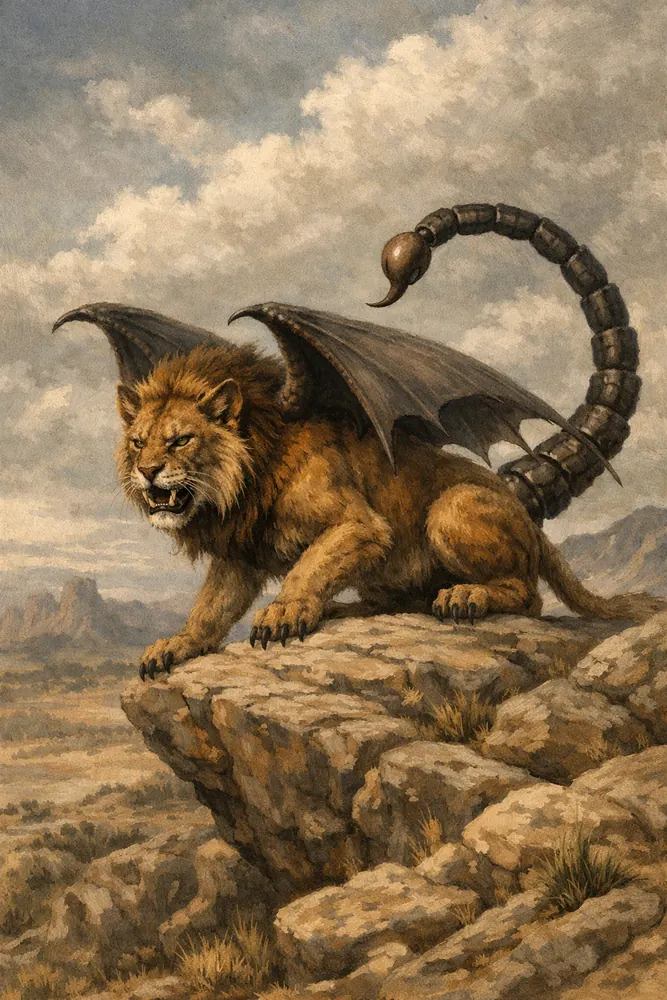
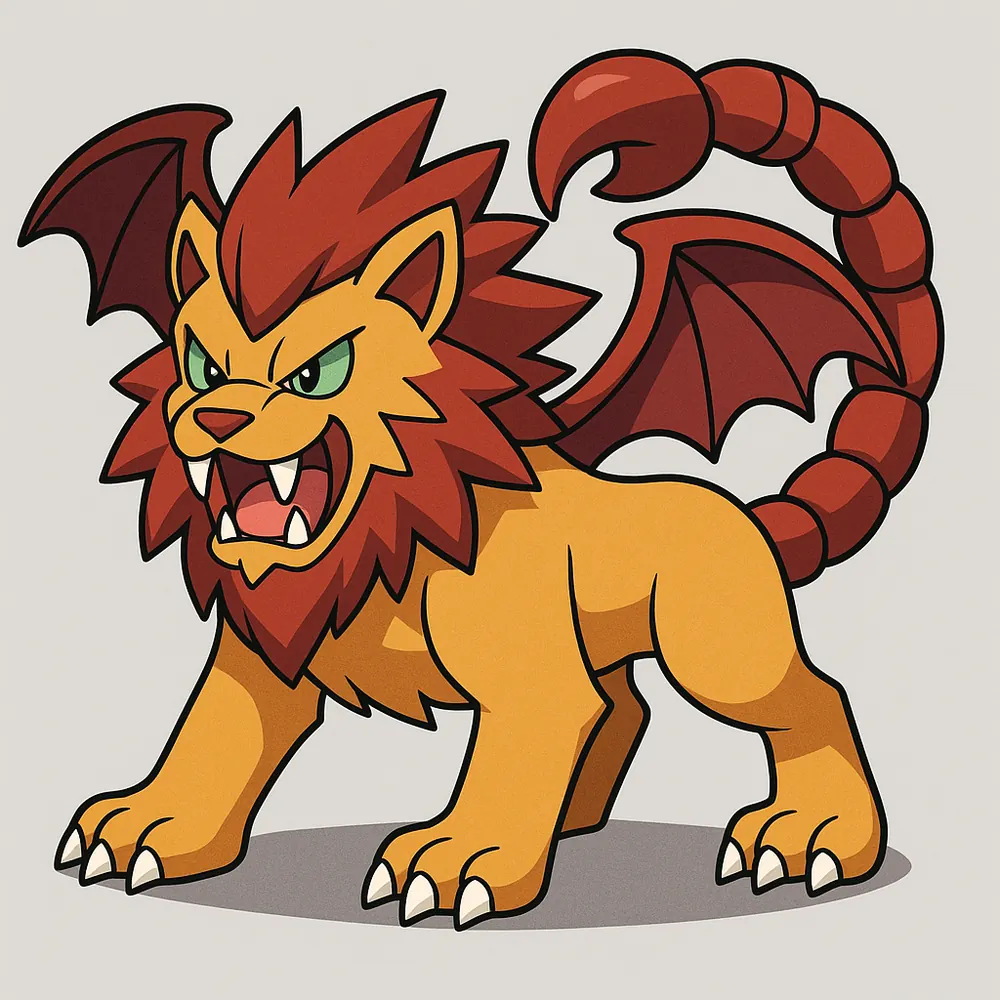
The Manticore is a creature designed by committee, and the committee was in a foul mood. It has the broad, tawny body of a lion, a pair of leathery wings like a bat’s stretched over a tent frame, and a tail of hard, segmented plates that curls up over its back and ends in a stinger the length of my forearm. Seen against the evening sky, perched on a rocky spire, it is the single most alarming shape I have ever drawn in my notebook.
And then it yawns, and you see that it has rather small, neat teeth, and a pink tongue, and the slightly offended expression of a cat that has been woken from a nap. They watch their territory from high outcrops for hours at a time, tail swaying, and I have come to believe that most of this watching is simply them waiting for something interesting to happen.
The Mystery of the “Spine Gardens”
Below the favorite perch of nearly every Manticore I have found, there is what I can only call a garden: dozens of barbed spines driven upright into the dry earth in rough rings and spirals. The patterns are too careful to be accidental, yet the spines are clearly the same ones it flicks at intruders.
An Arachnite weaver I met at a market in the canyon towns tilted her head so that all three of her eyes regarded me at once and told me the gardens are prophecies; the Manticore drops its spines where the future is thin, and a skilled reader can see what is coming. A Wika shaman, traveling far from her swamp to trade dream-masks, said that was nonsense and that the Manticore is simply marking where it buried its dinner. I find I cannot rule out either, though I did notice the Wika’s explanation involved fewer rings.
On the Matter of Bonding
The old tales call the Manticore a man-eater, and I spent my first month in the badlands sleeping with a frying pan for protection. I need not have bothered. A Manticore that knows you is as soppy as any fireside tabby, only much heavier and with considerably more points.
The trick, I am told, is patience under the sting. A wild Manticore will test a newcomer with a light tap of its stinger, carrying just enough venom to make your thoughts go soft and slow, like wading through warm syrup. If you panic or strike back, it leaves. If you sit quietly through the haze and are still there, unbothered, when your head clears, it seems to conclude that you are either brave or very dim, and that either sort makes good company.
The Arachnite, who are the acknowledged experts, go one better: they raise cubs from the egg-sack stage (they insist Manticore cubs come in sacks, which I doubt) and weave them little nets to sleep in. A cub raised so will follow its weaver everywhere, purring like a bellows. I was allowed to hold one. It stung me twice, affectionately, and I lost most of a Tuesday.
Observed Magical Variations
The Manticore’s venom seems to change character depending on the magic in its blood, though the attitude remains firmly feline.
Tawny coat that darkens to charcoal at the wings; violet-black stinger.
The classic breed. Its venom clouds the mind with a gentle fog, and it is almost impossible to see once the sun goes down.
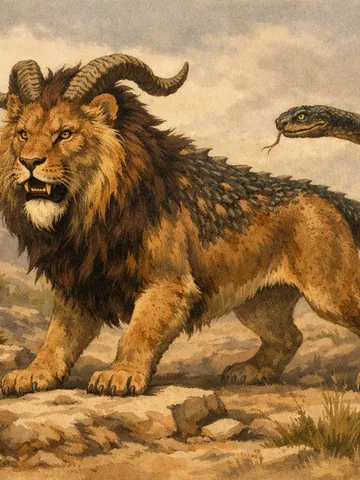
Coat the color of red sandstone; tail plates thick and rough like layered shale.
Heavier and far less inclined to fly. Its spines are blunt but hit like thrown stones, and it likes to sleep curled inside rockfalls.
Pale buff fur; enormous wings, nearly twice the usual span.
Spends most of its life gliding. The Hesskari say it can hang motionless on a desert updraft for an entire day, and they use it to spot caravans long before they arrive.
Ambrose PenhallowLorekeeper, Midlands Grand Academy