From the Field Journal of Ambrose Penhallow
The Cactus Cat
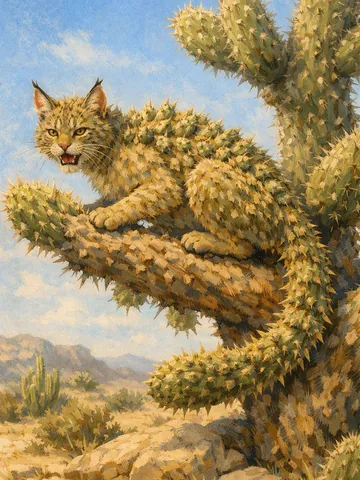
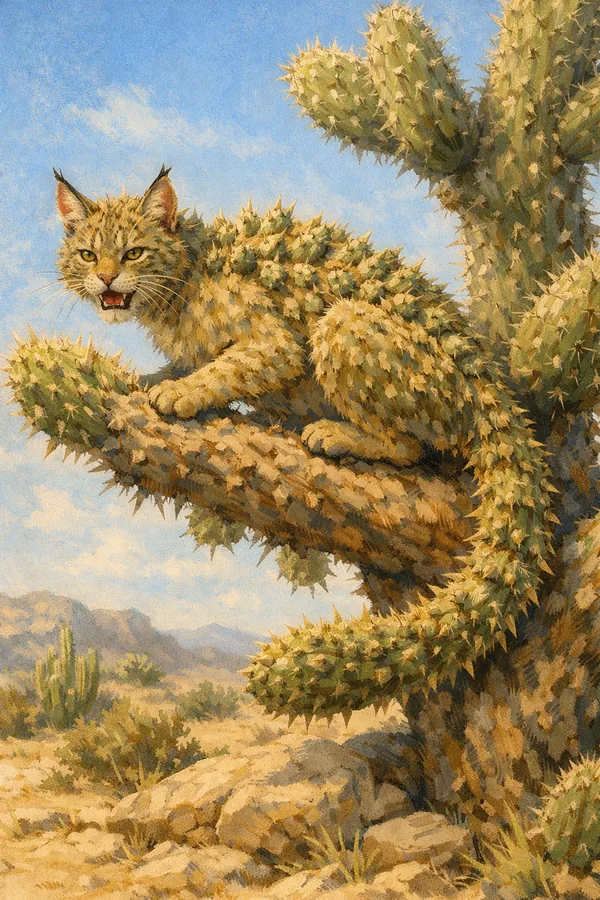
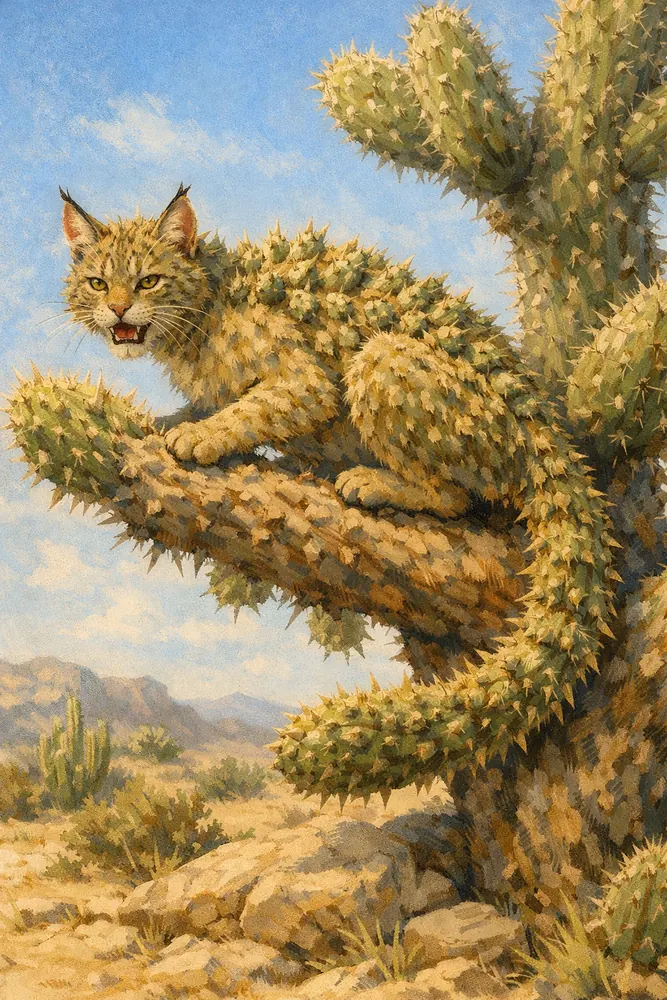
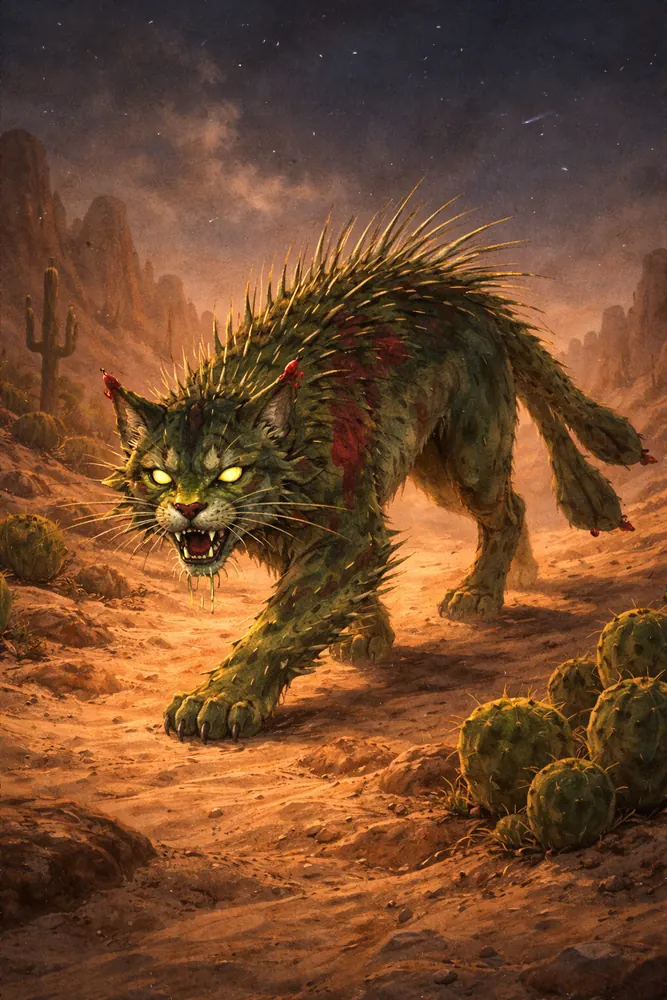
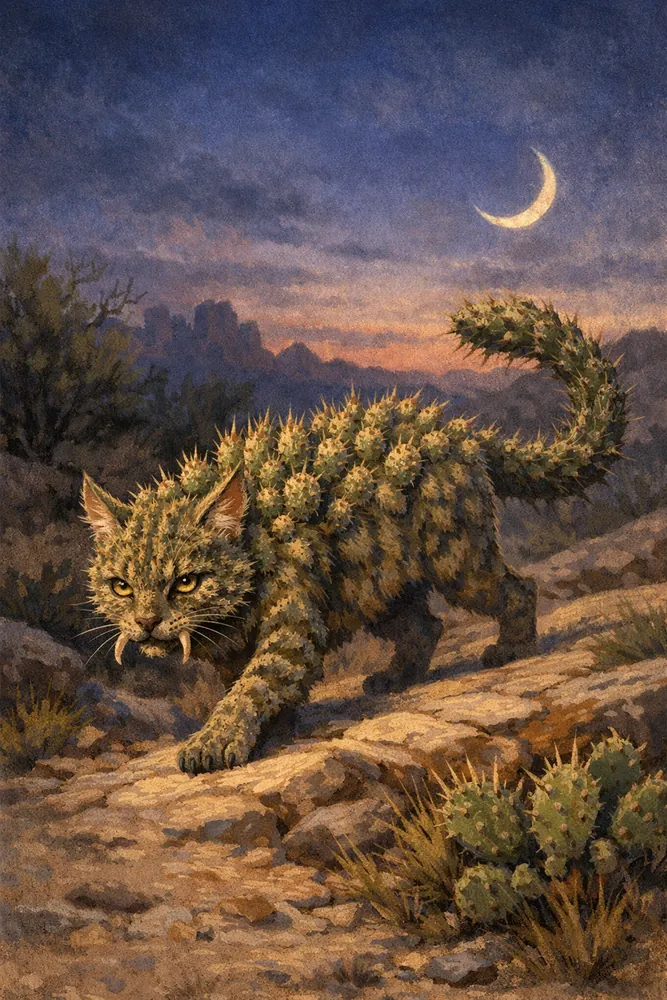
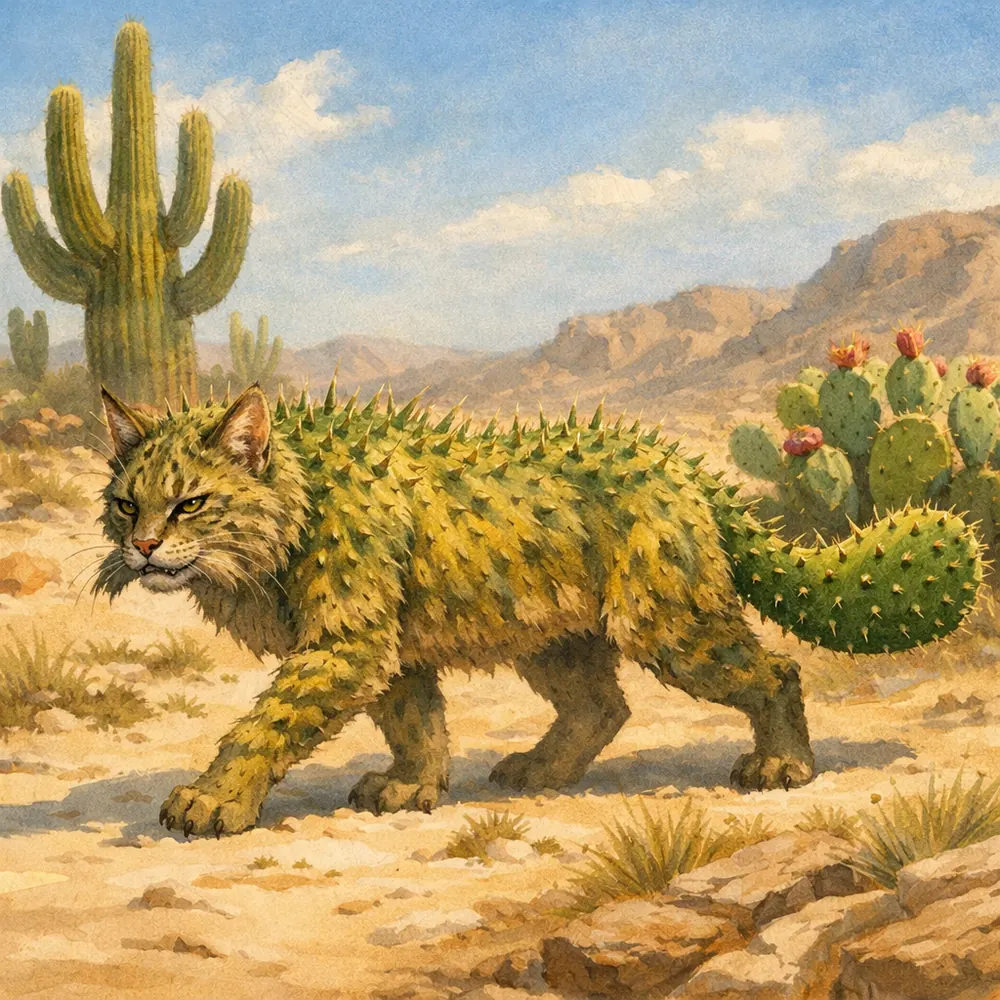
If the common housecat is a creature of comfort, the Cactus Cat is a creature of spite. Roughly the size of a bobcat but with the lean, corded muscle of a desert lynx, its most striking feature is its “fur.” It doesn’t possess hair in the traditional sense; instead, its hide is a dense, overlapping lattice of rigid, needle-like spines. These spines are not just for defense; they act as a primitive cooling system, radiating heat away from the body during the day and trapping a thin layer of warmth during the freezing desert nights.
The most dangerous part of the creature, however, is the tail. It is a thick, heavy appendage that terminates in a massive, bulbous “club” bristling with three-inch-long obsidian-hard spikes. A single swipe from a Cactus Cat doesn’t just cut; it crushes and punctures simultaneously.
The Mystery of the “Needle-Weep”
During the peak of the dry season, the Cactus Cat undergoes a process I have termed “The Weep.” The tips of its spines begin to exude a clear, sticky resin that smells remarkably like fermented honey. This scent is an irresistible lure for smaller rodents and even the occasional Jackalope.
The Hesskari (the lizard folk of the dunes) have a much darker interpretation. They claim the resin isn’t just a lure, but a “memory-drain.” They believe that if the resin touches your bare skin, the Cactus Cat can “smell” your path home. I suspect this is just a Hesskari way of telling me to stay out of the tall cacti, but given how often their scouts successfully avoid these predators, I’ve stopped questioning their “superstitions.”
On the Matter of Bonding
Bonding with a Cactus Cat is, quite literally, a painful process. They do not understand “softness.” To a Cactus Cat, anything soft is either prey or a weakness to be exploited.
The Hesskari are the only ones who regularly keep them as camp-guardians. To bond with one, a Hesskari warrior must engage in a “Thorn-Dance,” a rhythmic sparring match where the lizard-man uses his own toughened scales or leather shields to deflect the cat’s tail-strikes. If you can withstand its initial assault without retreating, the cat begins to see you as a “fellow stone.”
Once bonded, a Cactus Cat is fiercely loyal, though they never quite lose their edge. They don’t want to be petted; they want to be acknowledged. If you provide them with a steady supply of moisture-rich succulents (which they crack open with their tail-clubs), they will sit at the edge of your fire, a silent, prickly sentinel that even a Landshark would think twice about bothering.
Observed Magical Variations
The “Potency” of a Cactus Cat’s spines depends on the specific cactus groves they use to sharpen their tails.
Tall, green spines; a massive, four-lobed tail club.
The largest and most territorial. They can stand on their hind legs to mimic the silhouette of a desert cactus, remaining motionless for days.
Reddish-purple hide; smaller, finer needles that are barbed.
These are the “Trackers.” Their needles are designed to break off in the skin, causing a lingering itch that allows the cat to follow the scent of the victim.
Pale, moon-white spines; the tail club glows faintly in the dark.
Rare and deadly. They only hunt during the lunar peaks. Their spines are said to be “hollow,” allowing them to hiss as the wind passes through them.
Ambrose PenhallowLorekeeper, Midlands Grand Academy