From the Field Journal of Ambrose Penhallow
The Death Bat
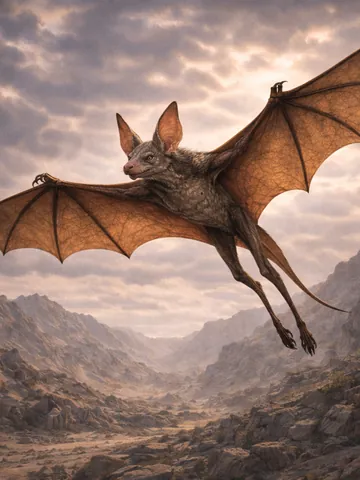
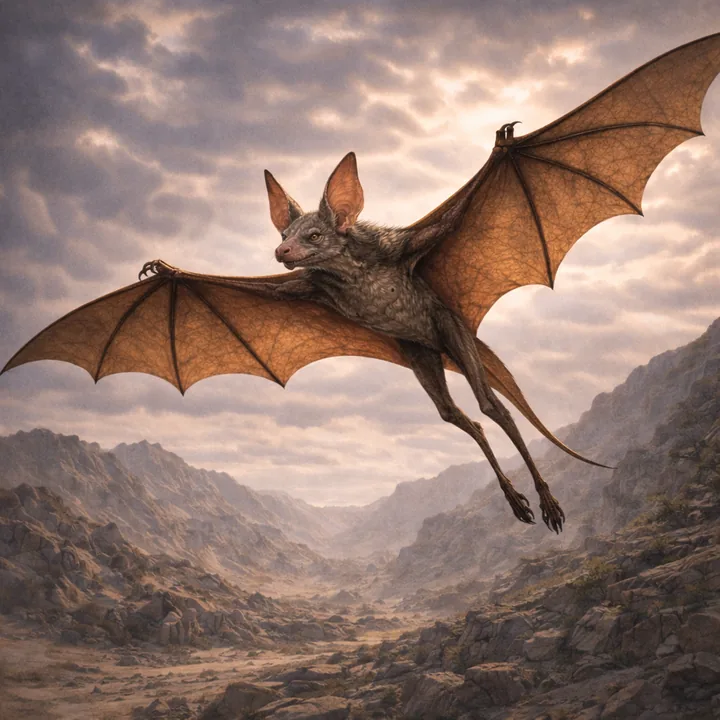
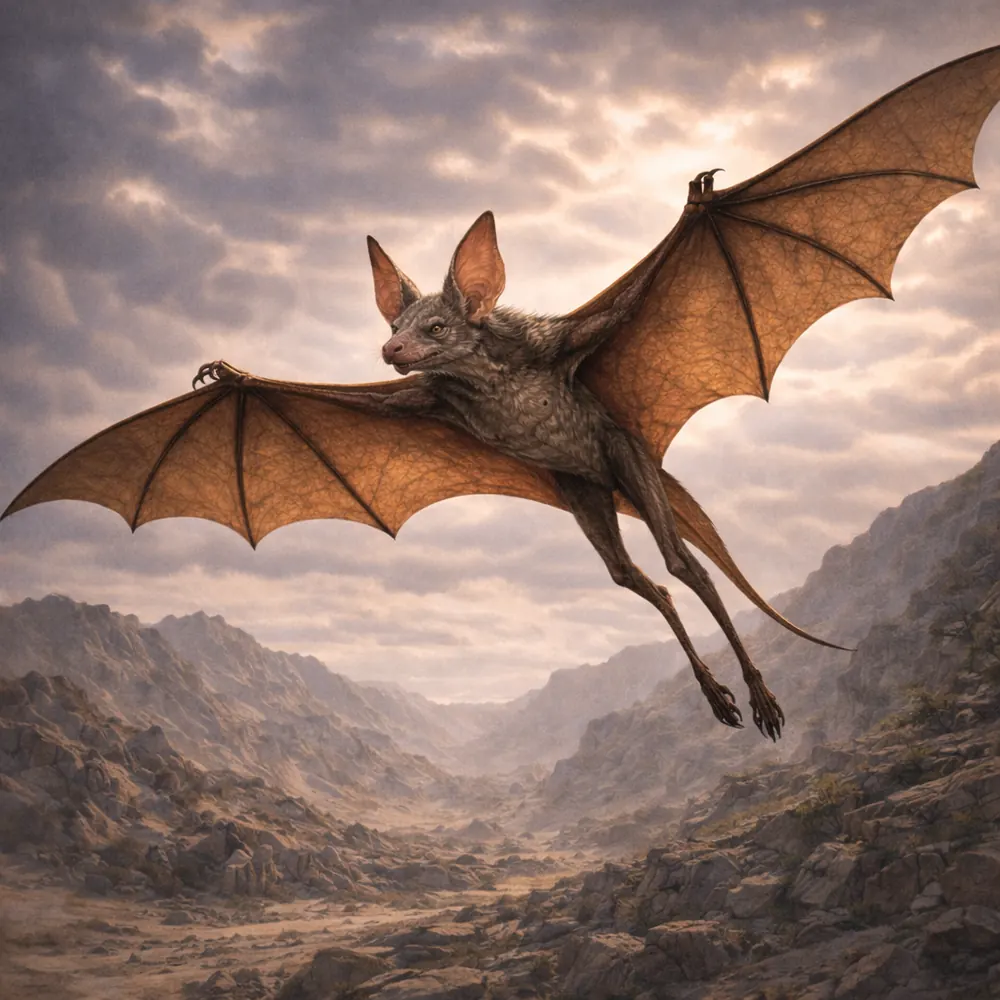
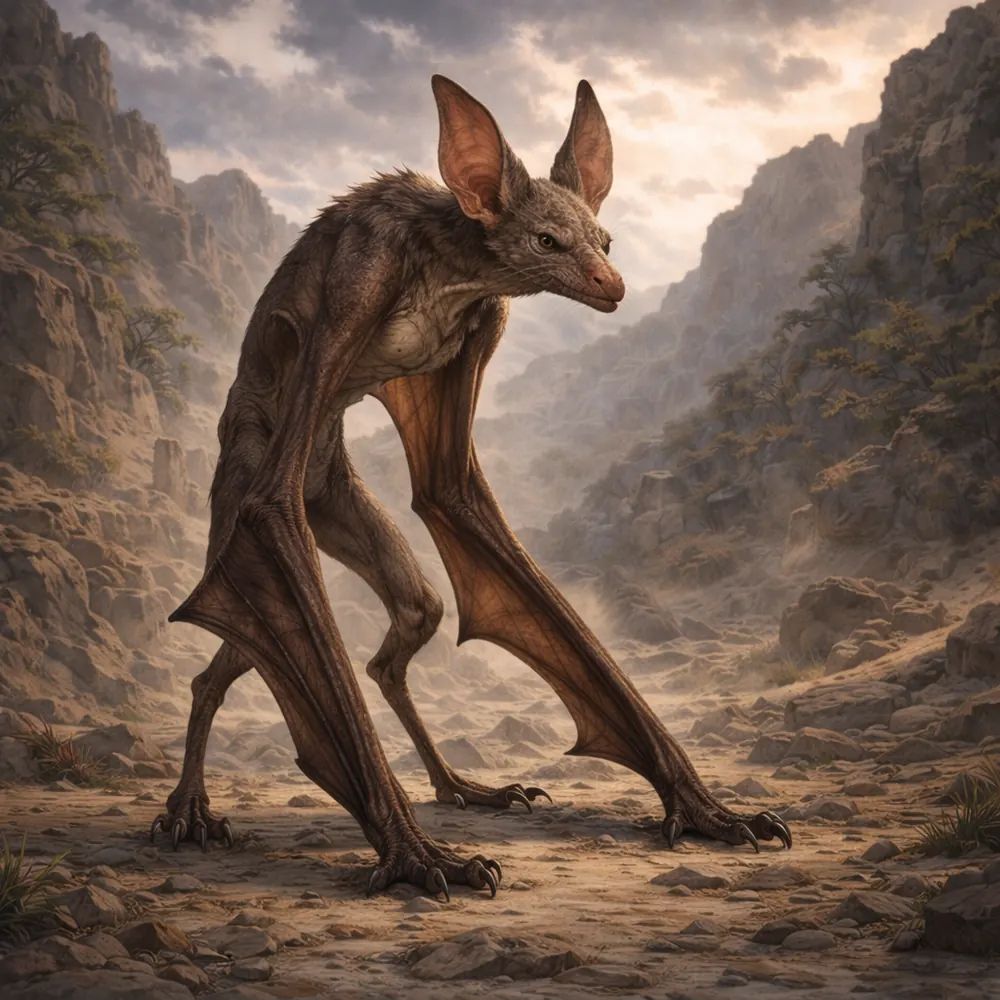
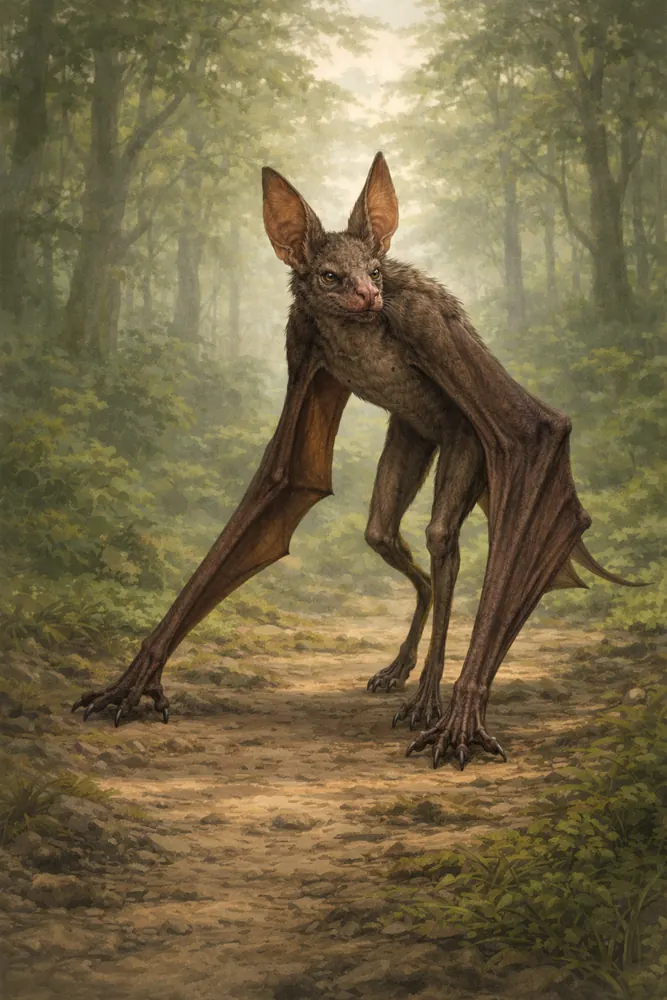
Imagine a bat drawn by someone who had heard bats described but never seen one, and who had then stretched the drawing on a rack overnight. The Death Bat is all elbows and knuckles: long, folding limbs, a narrow chest, and ears so large they swivel like a pair of ship’s sails catching every passing breeze. When its wings are tucked it stalks along the canyon floor on all fours with a slow, high-stepping gait that I can only describe as “a heron wearing a funeral coat.”
It is only when the wings open that you understand the scale of the thing. I once stood beneath one unfolding on a ledge and, for the space of a breath, the afternoon simply went dark.
The Mystery of the “Quiet Hour”
Every Death Bat colony I have observed falls completely silent for roughly an hour before dawn. Not a screech, not a click, not a rustle of membrane. Hundreds of them hang there like folded umbrellas, ears all turned in the same direction, listening.
The Arachnite tunnel-folk who share their caverns treat this hour as sacred and will not speak during it either. One of their prophets told me, with all three eyes closed, that the bats are listening to “the place where the Shadow was put away,” and that one day they will hear it knock. A far less mystical Arachnite weaver later took me aside and said they are simply listening for moths. I find I would prefer it to be moths.
On the Matter of Bonding
Despite the name, a Death Bat is a scavenger first and a hunter only when pressed, and it is a deeply practical creature. It does not want riddles or songs. It wants to know whether you are useful, and whether you are quiet.
The Arachnite are the undisputed experts, and their method is maddeningly simple. You go down into the dark without a lamp and you sit. Every time a Death Bat passes, it will screech at you, mapping you with that sound of its. If you flinch, it files you under “prey” or “nuisance.” If you sit perfectly still and let it look at you with its ears, night after night, eventually it begins to land nearby. The weaver who taught me this said it took her eleven months. It took me three nights to lose my nerve and light a candle, which set me back to the beginning.
I should also record, with some reluctance, that the Hags have their own methods. A coven I encountered in the eastern badlands kept three Death Bats tethered with rune-cords, and the creatures did everything they were told with dreadful, empty obedience. That is not a bond. I left quickly, and the bats watched me go in a way I still think about.
Observed Magical Variations
The shape of the Death Bat barely changes from one magic to the next; what changes is what you hear, or fail to hear, when it passes.
Charcoal-black membrane; eyes like two drops of ink.
The classic canyon stalker. When it wraps its wings around itself, lamplight seems to slide off it entirely.
Sandy brown fur; thick, calloused knuckles for walking.
Rarely flies at all. It digs out burrows in canyon walls and is the one the Arachnite trust to keep their tunnels clear.
Pale grey with blue-veined wings; enormous ears.
Roosts on cliff tops before thunderstorms. A shepherd swore to me that its screech can call the lightning down, though he may have confused cause and effect.
Ambrose PenhallowLorekeeper, Midlands Grand Academy