From the Field Journal of Ambrose Penhallow
The Land Jelly
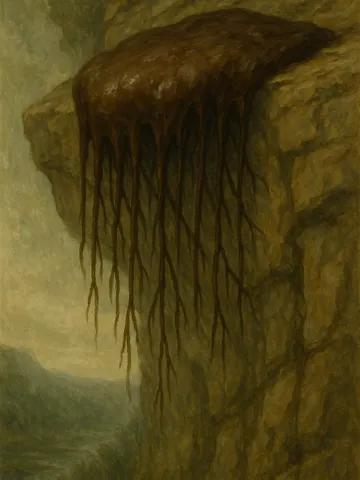
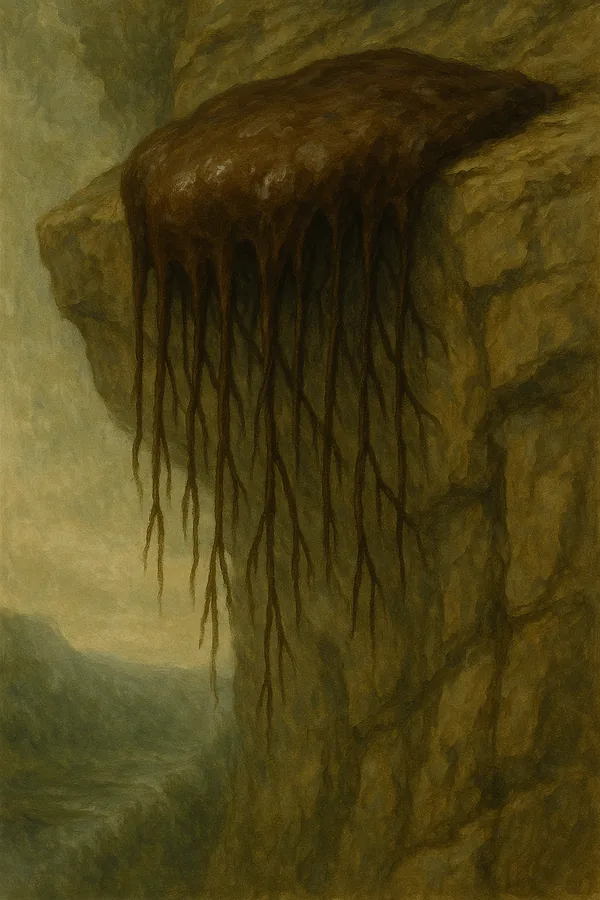
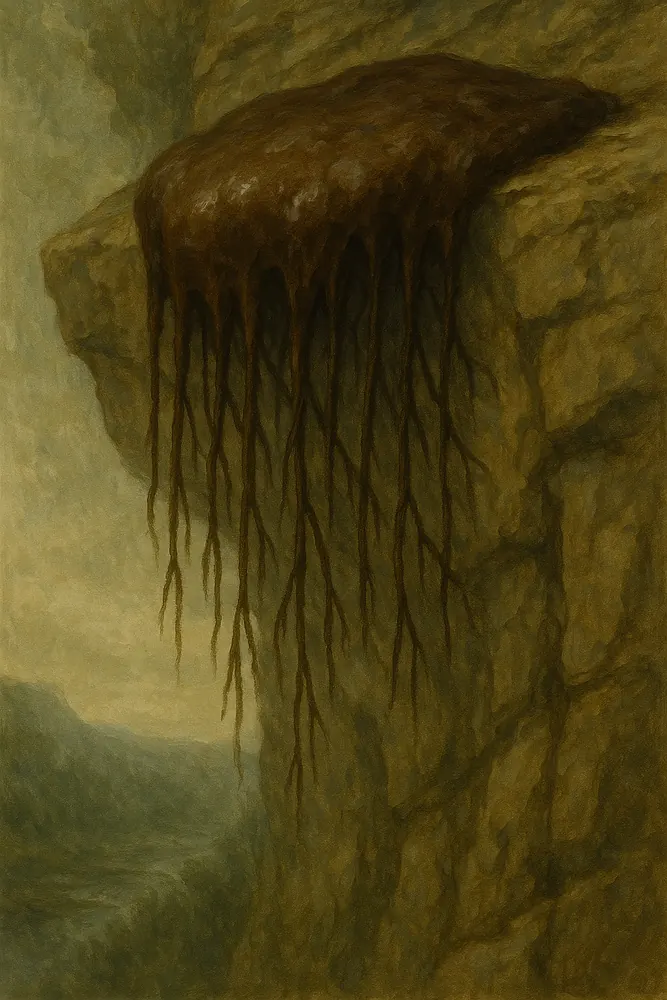
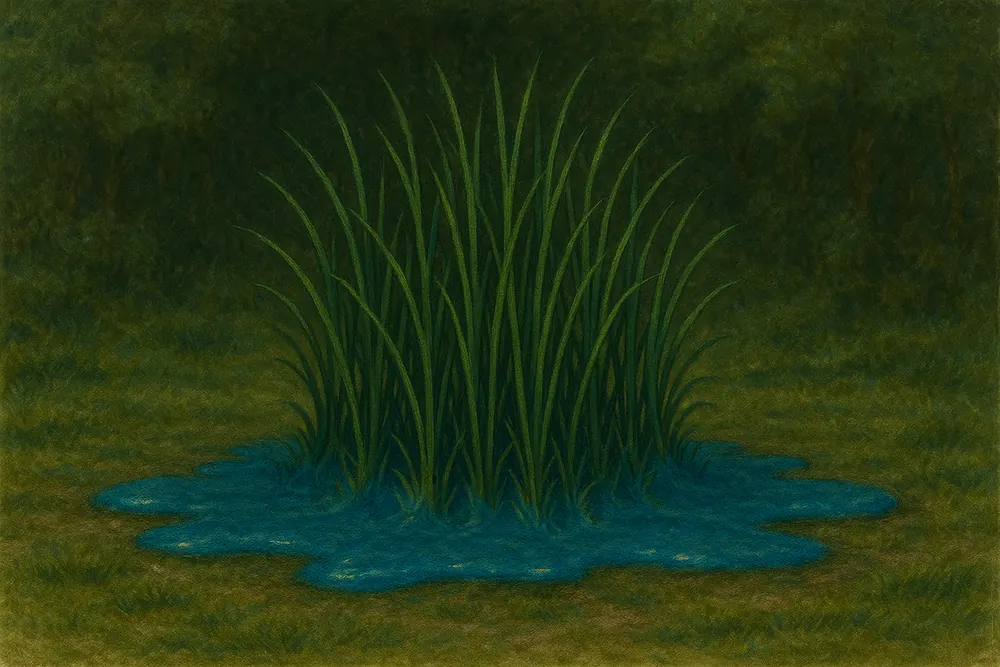
The Land Jelly is, in the plainest terms, a jellyfish that walked out of the sea and never went back. Nobody can tell me why. It keeps the soft, bell-shaped body and the long trailing tendrils of its ocean cousins, but it has traded the waves for damp cliff faces and shaded forest hollows. A large one hanging from a wet rock looks like a curtain of glass beads that someone forgot to take down; a small one in a puddle looks like nothing at all, which is precisely the problem.
They come in every size I can imagine, from thumbnail to washtub, and they seem to grow or shrink with the weather. In a wet season the cliffs above the western coves drip with them. In a dry one they retreat into cracks and hollows and wait, flattened and patient, for the rain.
The Mystery of the “Singing Cliffs”
On still evenings after heavy rain, the cliffs where Land Jellies hang begin to make a sound. It is a low, glassy humming, like a wet finger run around the rim of a goblet, and it rises and falls in long, slow waves. I have stood at the foot of the Greymoor cliffs and heard it go on for an hour.
The Sirens of the nearby coast claim this is the jellies singing to their relatives in the sea, and that it is a sad song, about leaving. They sang a little of it for me, which was beautiful and also made me want to walk into the ocean, so I asked them to stop. A Cephalyn pilgrim from the mid-nation, passing through on her way to the coast, turned a thoughtful shade of lilac and suggested instead that the sound is simply water moving through a great many bodies at once. “Not a song,” she said. “A tide, with nowhere to go.” I prefer her version, but only slightly.
On the Matter of Bonding
The Cephalyn are, without question, the masters here; they seem to treat Land Jellies as distant cousins who made a poor decision long ago. Their method of bonding is quiet and almost entirely about temperature. You find a small jelly, you cup your hands in cool water, and you hold them out flat beside it. If it trusts you, it will slide into your palms on its own. If you are warm, nervous, or sweating (as I was), it will sting you and slide away.
Once a Land Jelly has accepted you, the Cephalyn give it a bottle of its own, filled with water from the place you met. Water summoners at the Academy study these bonded jellies very earnestly, hoping to learn how a creature holds water magic in a shape with no vessel. I sat in on one of these lectures. The jelly in question spent the entire hour slowly escaping its jar, sliding under the door, and turning up in the professor’s teacup.
My own hands remained numb for most of an afternoon after my attempt. I recorded this as “partial success.”
Observed Magical Variations
The Land Jelly takes so readily to its surroundings that I suspect the variants are partly a matter of where they happen to have been sitting.
Perfectly clear bell; faint blue veins in the tendrils.
The common cliff-hanger. Against wet stone it is all but invisible; I have put my hand on three of them and only noticed the fourth.
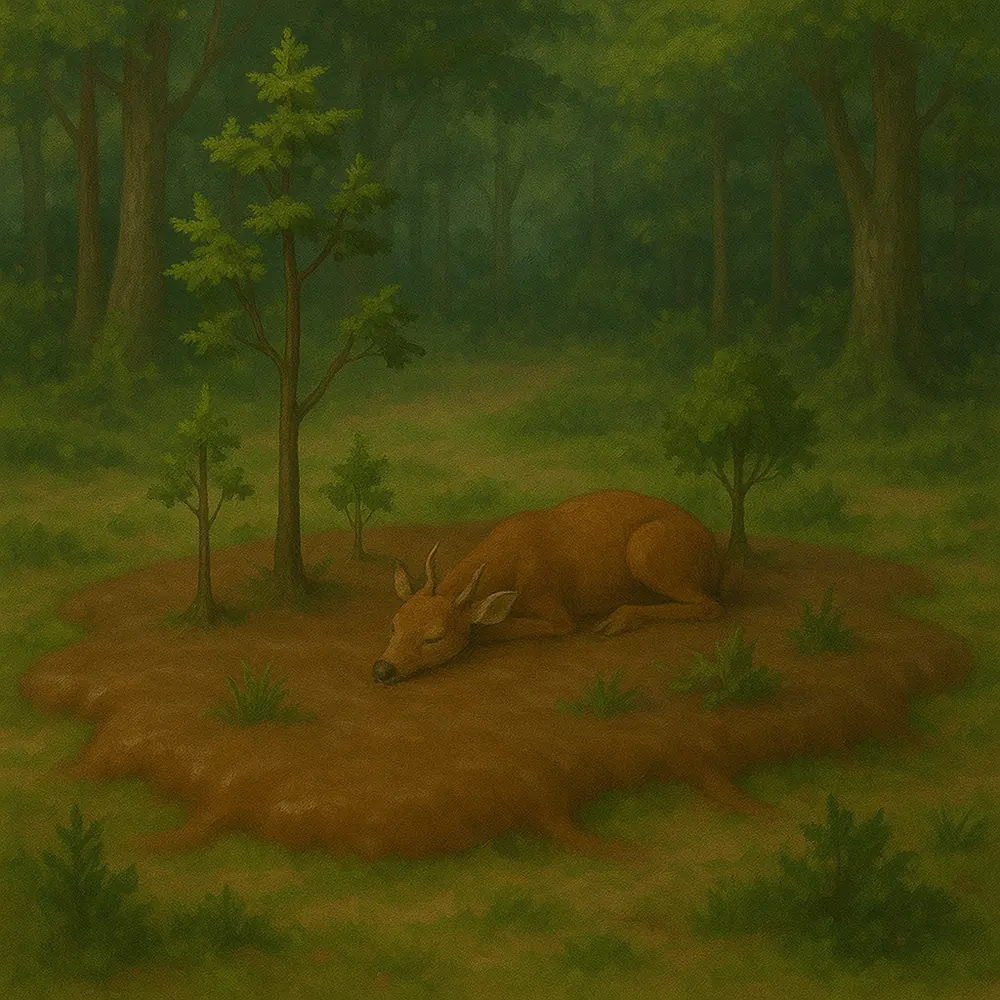
Murky green-brown, flecked with moss and grit.
Pools in forest hollows and lets leaves settle on top of it. Foragers say it keeps mushrooms fresh, and that the stinging is a small price to pay.
Inky purple, nearly black; tendrils that seem to drink the light.
Found only in deep caves. It glows faintly when touched, which would be lovely if the sting were not three times as strong.
Ambrose PenhallowLorekeeper, Midlands Grand Academy